Development of CNT thin film electrodes for lead ion sensing: a step toward scalable water quality monitoring
Gangwar et al. (2026): https://doi.org/10.1016/j.jelechem.2026.120284
Introduction
Heavy metal contamination in drinking water remains a major global concern because even trace concentrations can pose significant health risks. Electroanalytical sensing technologies offer rapid, sensitive, and on-site detection of these contaminants. In this article, we report a scalable and industrially viable carbon nanotube network thin-film (CNT-NTF) electrode for electrochemical detection of Pb²⁺ in water.
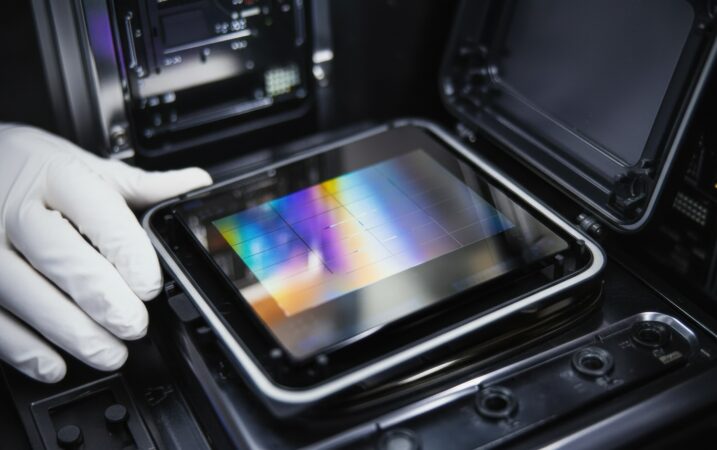
Carbon nanotubes grown by chemical vapor deposition were uniformly press-transferred onto PET substrates, enabling large-area, reproducible, and mass-producible sensor fabrication. The CNT-NTF sensors achieved sub-nanomolar (ppb) detection limits for Pb²⁺ with two distinct linear response ranges and reliable performance in buffer, simulated drinking water, tap water, and river water samples. The sensors detected Pb²⁺ well below WHO and US-EPA regulatory limits, maintained stable responses between 5 and 45 °C, and showed robust performance in the presence of As³⁺ and Cd²⁺.
These results demonstrate the potential of the CNT-NTF platform as a scalable and cost-effective solution for monitoring heavy-metal contamination in water systems.
Main conclusions
- Proven sensing capabilities: The study successfully developed scalable carbon nanotube network thin-film (CNT-NTF) electrodes capable of detecting lead in drinking water with high sensitivity, stability, and reproducibility.
- Effective performance in real water samples: The electrodes reliably detected lead concentrations below WHO and EPA guideline limits in untreated tap and river water, without requiring added supporting electrolytes, across varying temperatures and water conductivities.
- Highly scalable manufacturing: The press-transfer fabrication method produced uniform and reproducible CNT films, addressing a key challenge of CNT sensor manufacturing and improving prospects for large-scale production.
- Strong potential for practical deployment: The sensor maintained competitive performance even in the presence of common interfering ions (e.g., As³⁺ and Cd²⁺), making it a promising low-cost solution for real-time lead monitoring, with future work focused on automated production and field validation.
Interested in carbon nanotubes for different applications? Get in touch